
From its confident debut in 1976 to flexi-discs, pocket editions and a growing family of spin-offs, Rustler certainly lived up to its “Big Bold” billing. Its early pages reveal a magazine full of ambition, bawdy humour and invitations for readers to get involved.
‘Humble’ Beginnings!
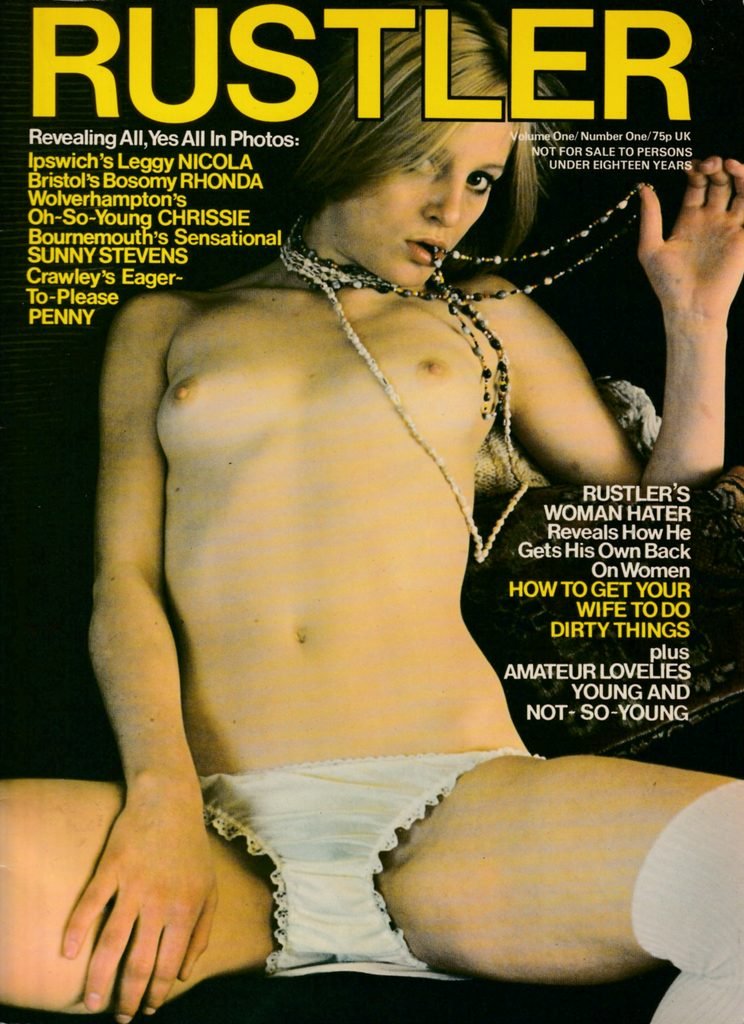
Launched in 1976 by Gold Star Publications Limited, Rustler clearly had big plans from the start. The editorial in Volume One Number One wasted little time setting out its recipe:
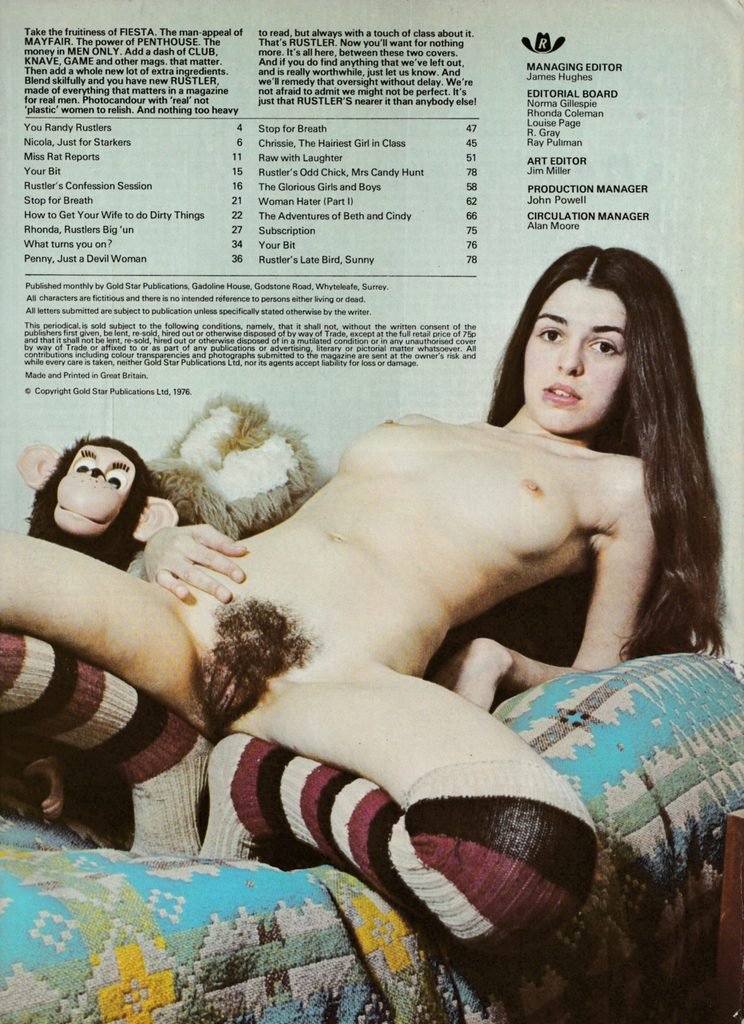
“Take the fruitiness of FIESTA. The man-appeal of MAYFAIR. The power of PENTHOUSE. The money in MEN ONLY. Add a dash of CLUB, KNAVE, GAME and other mags. that matter. Then add a whole new lot of extra ingredients. Blend skilfully and you have new RUSTLER, made of everything that matters in a magazine for real men.”
Humble beginnings? Perhaps. Humble ambitions? Certainly not!
What’s in a Name?
Gold Star Publications Limited was founded by David Gold, Ralph Gold and David Sullivan. We haven’t found an official explanation of how they chose the name Rustler, but the launch issue offers a visual clue: a cowboy hat bearing the letter R.
That little emblem gives the title a distinctly Wild West flavour. Was the name also a playful nod to Larry Flynt’s American magazine Hustler, launched in 1974? It’s an intriguing possibility, although the logo alone cannot settle the question.
Randy Rustlers Write
The first issue already devoted three pages to letters, beneath the appropriately cheeky heading “Randy Rustlers Write”.
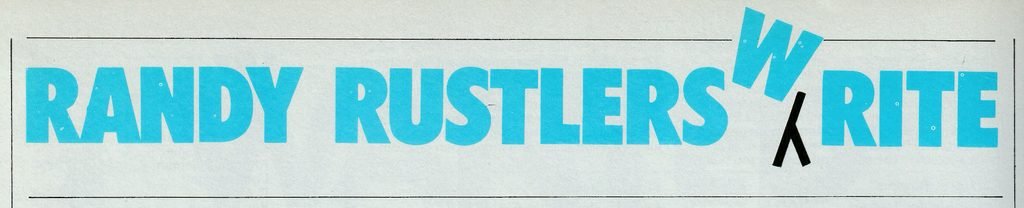
How did a brand-new magazine have readers’ letters before anyone had seen a copy? The introduction anticipated that question:
“Here for openers are ‘early arrivals’: letters received by RUSTLER even before it got into print. That’s what comes of mentioning it in other magazines from the same stable!”
Were they all genuine? We can’t establish that from the introduction alone. However, promotion in the publisher’s existing magazines offered a ready explanation for at least some early correspondence.
Either way, the letters pages helped Rustler present itself as a magazine with an audience already eager to join in.
Bawdy Humour and Reader Participation
Rustler established its editorial voice from the outset. Its pages mixed bawdy humour with puns, exaggerated promises and a conversational style that made readers part of the proceedings.
For us, much of the early magazine’s charm lies in that editorial cheek. The photographs supplied the explicit content, while the writing gave Rustler a personality of its own.
Behind the bluster, the editors also invited feedback. The launch editorial asked readers to point out worthwhile omissions and promised to put them right. Rustler might have sounded supremely confident, but it still wanted to know what its audience thought.
“Your Bit”, its readers’ wives feature, and “Rustless of the Month”, the title awarded to its centrefold models, both appeared in the first issue and became regular features.
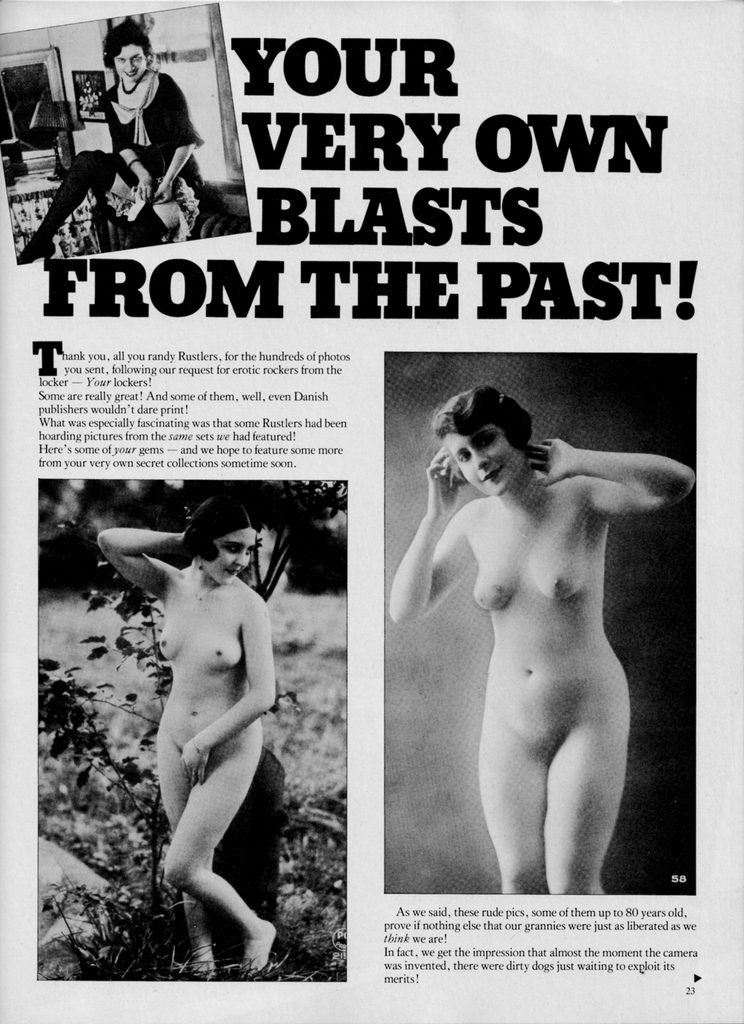
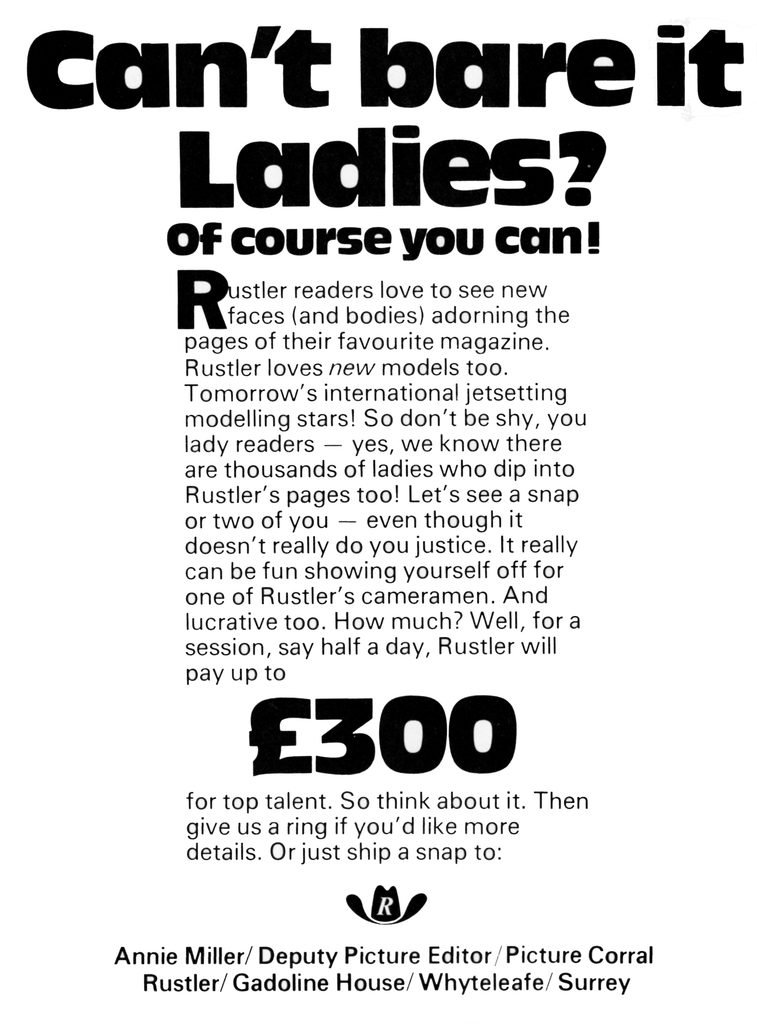
Reader participation extended beyond those pages. Rustler invited contributions of vintage photographs for its “Blasts from the Past” feature. Meanwhile, a recruitment advert addressed the “thousands of ladies who dip into Rustler’s pages” and encouraged them to try modelling.
The advert offered up to £300 for half a day in front of the camera. Even its recruitment copy came with a wink: “Can’t bare it Ladies? Of course you can!”
Becoming ‘Big Bold Rustler for Men’
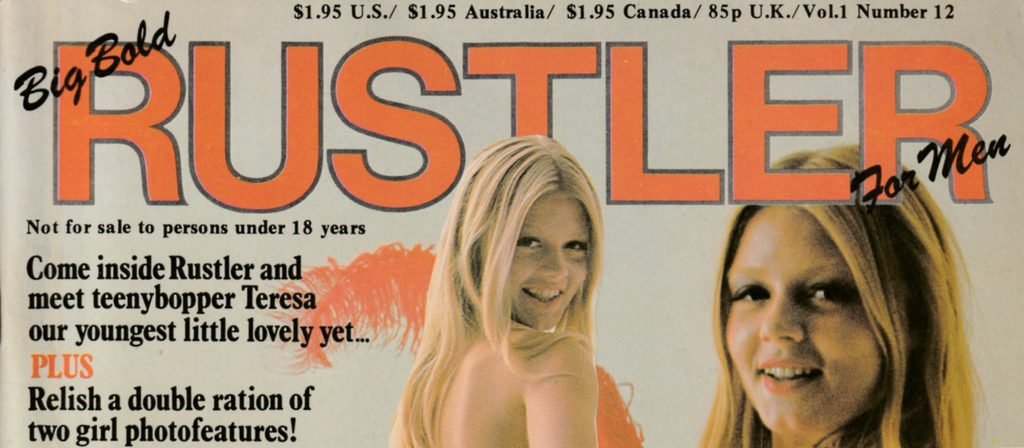
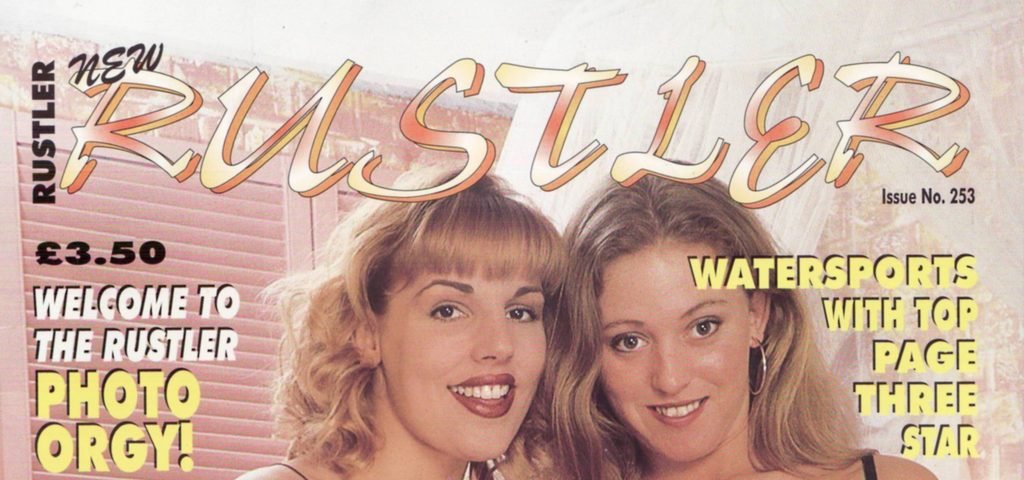
By issue seven, Rustler’s cover lettering carried two additions: “Big Bold” across the top of the first R and “For Men” across the bottom of the final R.
Just in case top-shelf browsers had any doubts about the intended audience!
The wording suited the magazine’s assertive personality and remained a familiar part of its cover identity through issue 252 in 1996. Issue 253 introduced a redesigned title treatment, with “New” replacing the longstanding billing.
1979: Listen With Rustler
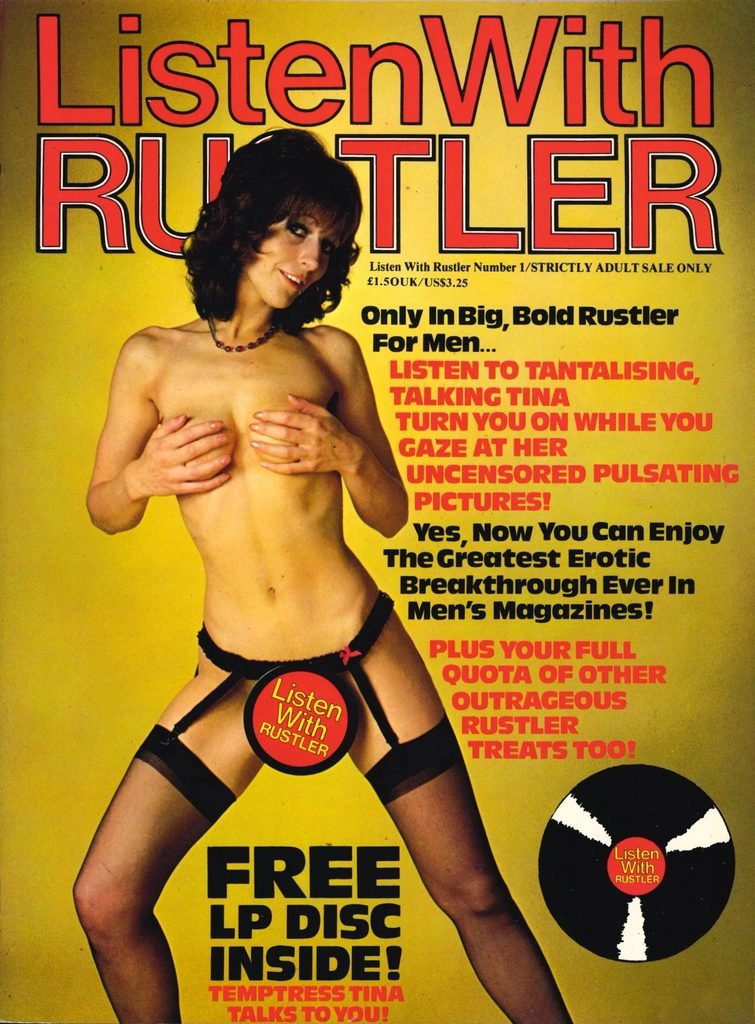
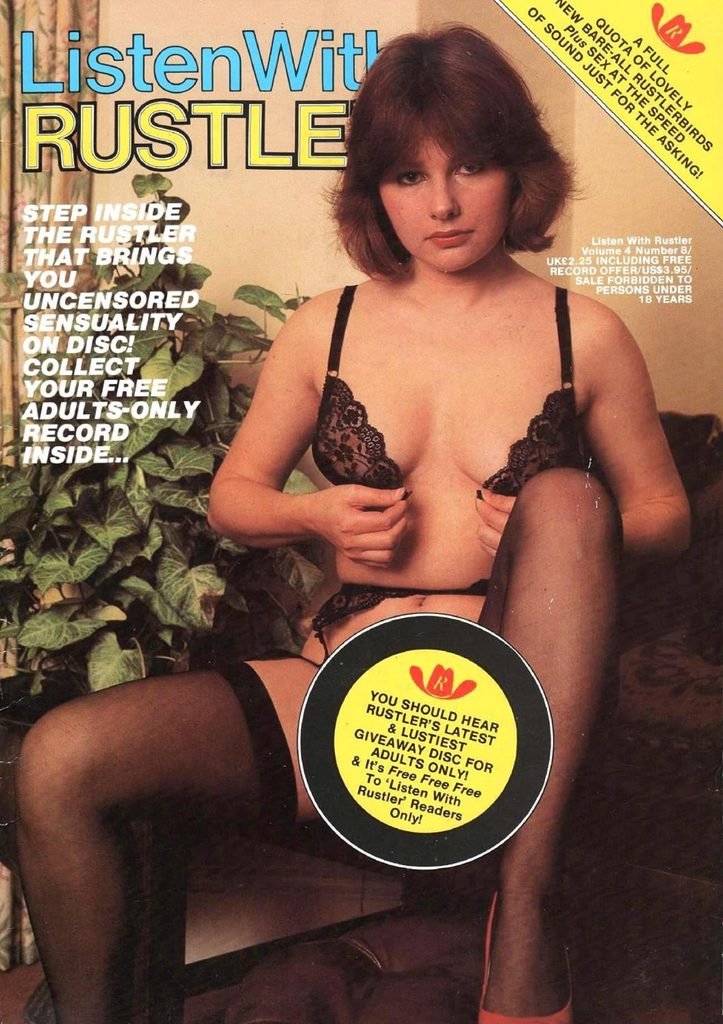
In 1979, Gold Star Publications Limited launched Listen With Rustler, adding sound to the magazine experience with a seven-inch flexi-disc playing at 33⅓ rpm.
Listen With Playbirds and Listen With Whitehouse appeared around the same period. We haven’t established which of these British adult titles introduced the format first, so that particular race remains open.
Listen With Rustler’s first cover made its own position clear, announcing “The Greatest Erotic Breakthrough Ever in Men’s Magazines!”
The series continued into 1985. The latest issue we have identified is Volume Four Number Eight; we haven’t established whether any further issues followed.
Some of the original recordings later found a new audience. In 2004, Trunk Records released a remastered, nine-track CD compilation, catalogue number JBH004CD. It includes “I’m Juicy Lucy”, “Tantalising Tina” and “Mary Millington Talks Dirty”.
The compilation can also be found on Spotify.
Pocket Rustler: ‘Pilferable Pocket-Size’
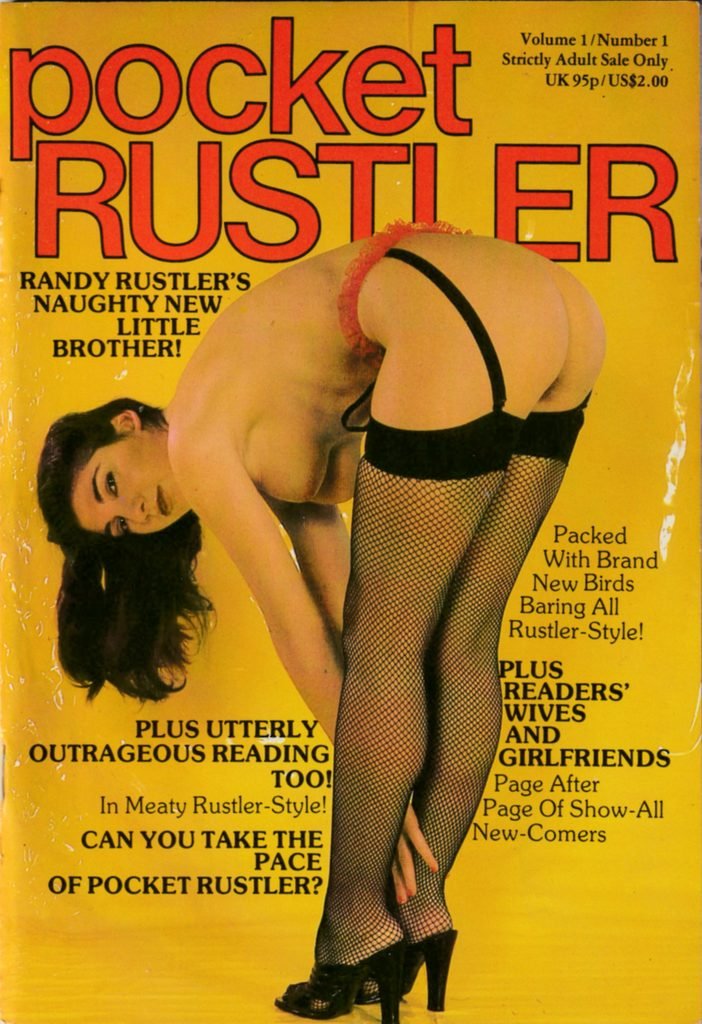
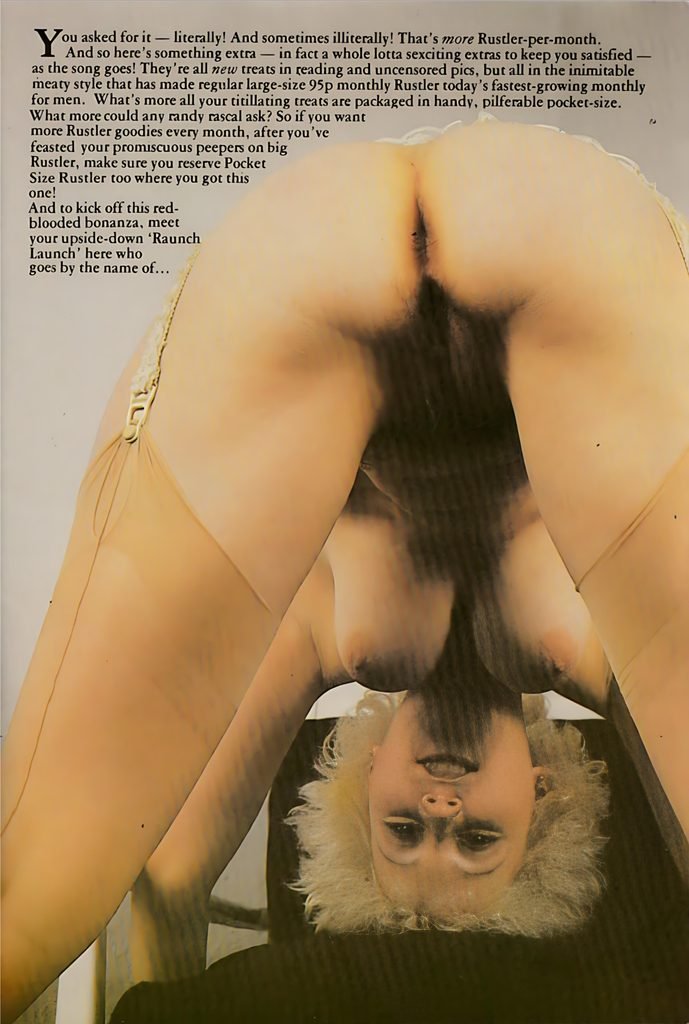
Also launched in 1979, Pocket Rustler offered readers another helping in a smaller format.
Its opening editorial announced:
“You asked for it — literally! And sometimes illiterally!”
The promise was more Rustler every month, with the familiar editorial style squeezed into a conveniently portable edition. As the magazine put it:
“What’s more all your titillating treats are packaged in handy, pilferable pocket-size.”
“Pilferable” is quite the selling point. Presumably the publisher still preferred readers to pay for their copies!
And They Didn’t Stop There!
Rustler’s growing family eventually included at least a dozen spin-off publications.
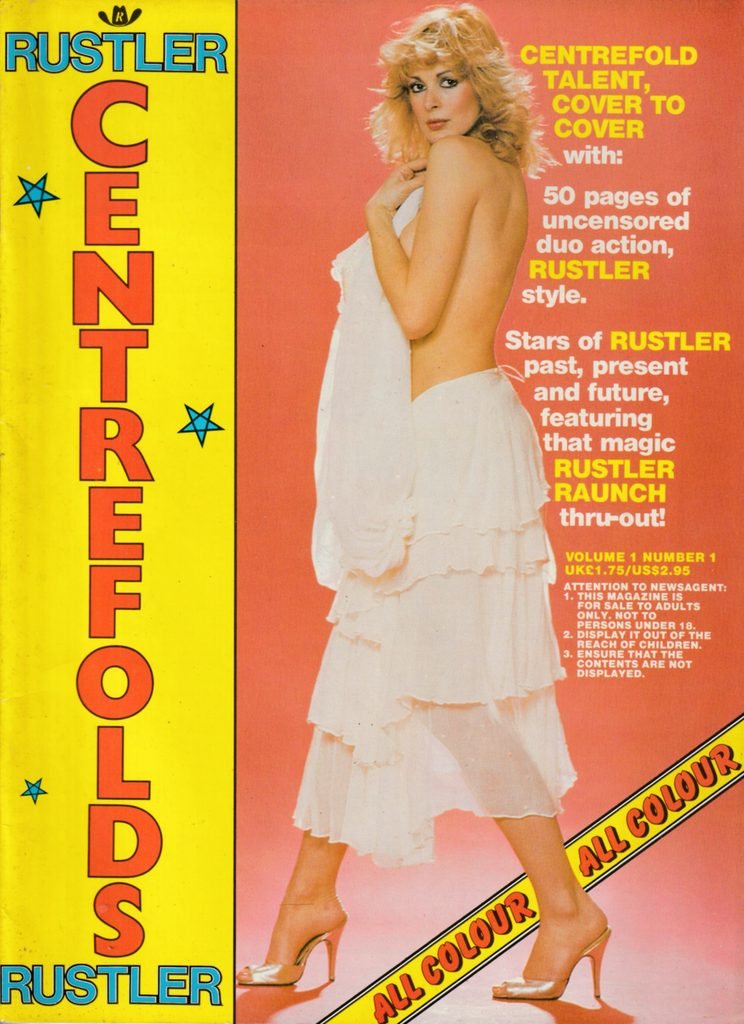
Alongside Listen With Rustler and Pocket Rustler came Rustler Big Un’s, Rustler Centrefolds, Rustler Close Ups, Rustler’s Explicit Sex Positions and Rustler’s Nymphs.
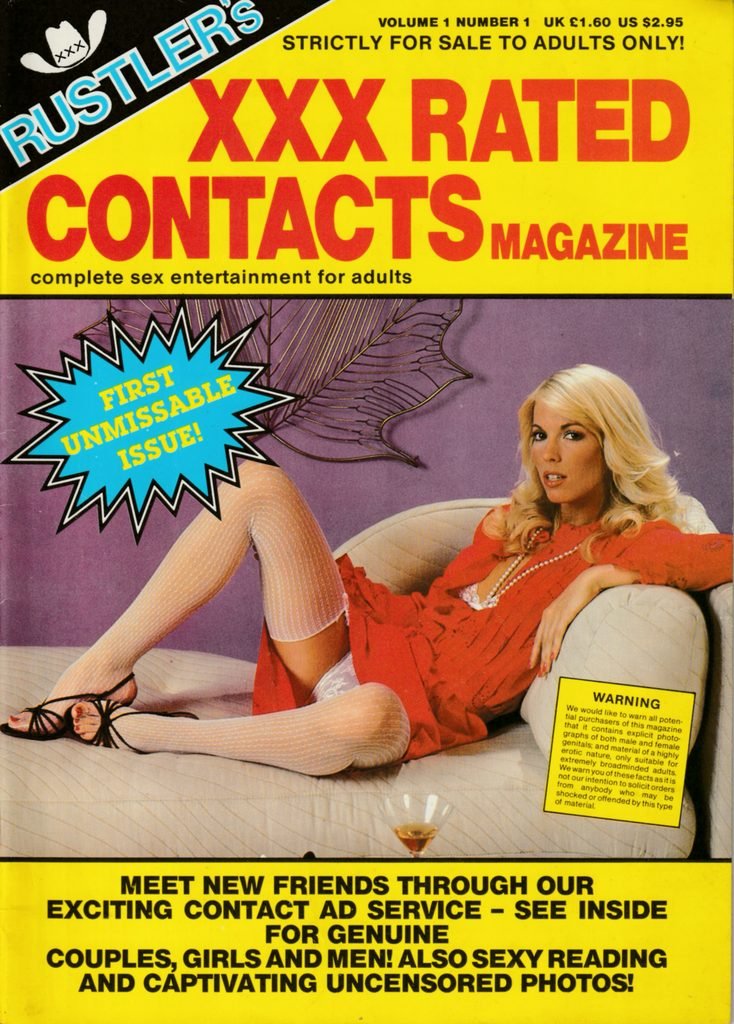
Other titles included Rustler Sampler, Rustler Sex Fantasy, Rustler Shavers, Rustler Very Naughty Bits and Rustler’s XXX Rated Contacts.
Later additions included Rustler’s Cherry Poppers and Rustler’s XXX Teenage Hardcore, with the latter subsequently incorporating Cherry Poppers.
Thirty-One Years on the Top Shelf
Rustler ceased publication in 2007, bringing its 31-year run to an end.
For collectors, its changing covers, early reader features and numerous spin-offs offer plenty to explore. The editorials and adverts also preserve something less easily captured by a list of dates: the magazine’s unmistakable voice.
Back in 1976, Rustler promised to blend the ingredients of its established rivals into something of its own. Over the next three decades, it certainly gave readers plenty of Rustler.
Browse our selection here